Common problems with Highbury narrow street rubbish collections
Posted on 31/07/2026
Highbury has charm in spades, but its narrow streets can make rubbish collection a proper headache. Anyone who has tried to get bulky waste, builders' debris, or even a few awkward bin bags out of a tight terrace, a mews-style lane, or a parked-up road will know the drill: access is tricky, timing matters, and one small mistake can lead to delays or extra hassle. This guide breaks down the common problems with Highbury narrow street rubbish collections, why they happen, and what you can do to keep things moving without drama.
Whether you are clearing a flat near Highbury Fields, tidying a house after renovation, or trying to organise a one-off collection after a weekend declutter, the same issues tend to crop up again and again. Let's face it, narrow streets do not forgive sloppy planning. The good news? Once you know the pressure points, you can work around them quite neatly.

Why Common problems with Highbury narrow street rubbish collections Matters
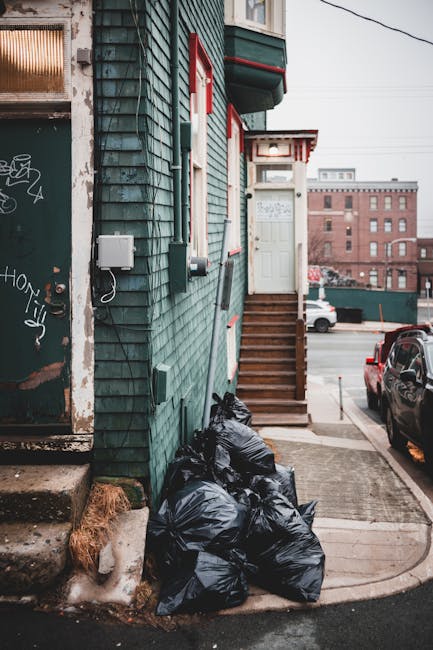
Highbury is not a place where waste collection difficulties are just a minor nuisance. They can affect daily life, neighbours, property access, parking, and even how quickly a clearance job is completed. On a narrow road, a small obstruction becomes everybody's problem fast. A bin left half on the pavement, a van blocking the wrong side of the street, or a pile of waste that cannot be lifted safely can create knock-on delays for residents and crews alike.
This matters even more in mixed-use pockets where you have flats, shops, offices, and houses close together. If a collection misses the ideal window, the rubbish may sit out longer than planned. That can mean complaints, odours, pests, or just a street that looks untidy for longer than anyone would like. Not exactly the Highbury vibe, is it?
There is also a practical money angle. The more difficult the access, the more important it becomes to plan correctly. A failed collection, a return visit, or a misunderstanding about what can be taken can add stress and cost. If you want a broader sense of the service landscape, the services overview is a useful place to understand the types of support typically available.
Expert summary: In Highbury's tighter streets, the biggest issue is rarely the waste itself. It is the access, timing, and lifting conditions around the waste that cause the real bottlenecks.
How Common problems with Highbury narrow street rubbish collections Works
At a simple level, rubbish collection in a narrow street still follows the same basic process: identify the waste, decide how it will be removed, choose a collection time, and make sure the route, parking, and loading point are workable. The difference in Highbury is that the margin for error is tiny.
Here is what usually happens in practice. The collection team arrives and checks whether the vehicle can safely stop nearby. If the street is too tight, if cars are parked awkwardly, or if there is no clear place to load, the team may need to park farther away and carry items by hand. That sounds manageable until you are dealing with heavy wardrobes, broken plasterboard, garden cuttings, or mixed builder's waste. Then it gets tiring. Fast.
Another common layer is waste type. Domestic rubbish, recycling, green waste, and construction waste often require different handling. A service like rubbish collection in Highbury may suit general household loads, while more specialist jobs may need other approaches. For example, a post-refurbishment clear-out can be better aligned with builders' waste disposal in Highbury if the load includes rubble, timber, or packaging from a project.
The collection can also be affected by surrounding conditions. School-run traffic, delivery vans, event-day congestion, and bin day schedules all matter. Around busier local roads, these pressures can stack up quickly. If you live near a hotspot, it helps to think a few steps ahead rather than assuming the street will be clear when the van turns up.
Key Benefits and Practical Advantages
When narrow street collections are planned properly, the benefits are bigger than people expect. The obvious one is convenience. You avoid hauling waste to a distant point or making repeated trips to a civic site. But there are a few other advantages worth spelling out.
- Less disruption to neighbours: A well-timed pickup reduces the chance of blocked access or waste sitting outside for too long.
- Safer handling: Good planning means fewer awkward lifts and less risk of damage to doorways, railings, pavements, or vehicles.
- Better time control: A collection that fits the street layout can be completed far more efficiently.
- Cleaner presentation: This matters in Highbury, where streets can feel cramped even on a good day. A tidy removal keeps the area looking cared for.
- More predictable outcomes: Once access is understood, there are fewer surprises on the day.
There is also a quieter benefit: peace of mind. When you know the collection plan actually suits the street, you stop worrying about whether the van will fit, whether the bins will be moved, or whether the waste will be rejected. That alone is worth a lot.
For residents dealing with tight turnaround times, it can also be helpful to compare collection options with local guidance on same-day rubbish removal in Highbury. Fast collection is not always the answer, but when the timing is right, it can solve a problem before it snowballs.
Who This Is For and When It Makes Sense
This topic is relevant to more people than you might think. Narrow street rubbish collections are not just for major clearances. They affect ordinary Highbury residents, landlords, letting agents, small businesses, tradespeople, and office managers too.
You are likely to care about these problems if you are:
- clearing a flat, maisonette, or terraced home on a tight road
- moving house and need old furniture removed quickly
- managing end-of-tenancy waste from tenants
- dealing with garden waste in a small rear access lane
- organising office or shop clear-out rubbish
- overseeing renovation waste where skip access is limited
It also makes sense for anyone who has already experienced a failed collection. You know the scene: the team arrives, looks at the parked cars, tilts their head, and suddenly the whole thing becomes a reschedule. Frustrating? Absolutely. Avoidable? Often, yes.
If your situation involves a house clearance, the access issue becomes even more important because larger items often need more room to move safely. In those cases, house clearance in Highbury can be a more sensible fit than trying to handle it piecemeal. Likewise, office clear-outs in compact premises may benefit from a planned approach through office clearance in Highbury.
Step-by-Step Guidance
If you want the collection to go smoothly, the planning matters just as much as the pickup itself. Here is a practical way to approach it.
- Identify the waste clearly. Split out household rubbish, bulky items, green waste, and any builder's debris. Mixed loads are where confusion starts.
- Check the access route. Look at the road width, parked cars, turning space, and whether the crew can stop legally and safely near your property.
- Measure awkward items. Sofas, wardrobes, mattresses, and white goods can be deceptively tricky in narrow hallways and stairwells.
- Choose the right timing. Early morning, off-peak periods, or a slot that avoids heavy local traffic can make a big difference.
- Keep items grouped and ready. Do not leave everything scattered between rooms, front steps, and pavement edges if you can avoid it.
- Confirm special items in advance. Mattresses, fridges, paint tins, and construction waste can require different handling. It is better to ask first than to sort it out on the kerb.
- Leave a buffer for surprises. In real life, there is always a parked car in the way or a neighbour's delivery van sitting right where you needed space. Build that into your plan.
A useful rule of thumb: the narrower the street, the more important it is to reduce the amount of "day-of" decision making. Have the waste ready. Have the route checked. Have the timing agreed. Small things, but they save a lot of faff.
Expert Tips for Better Results
In our experience, the best narrow-street collections are the ones that feel almost boring on the day. No scrambling, no second-guessing, no "where should this go?" moment at the front door. That calm finish usually comes from a few habits.
1. Think in carrying distance, not just street width. Even if the van cannot stop right outside, ask how far items will need to be moved. Ten metres is fine. Fifty metres with a broken bookcase and no lift? Not so fine.
2. Separate awkward items early. Fridges, glass, and heavy broken furniture can slow the job down. If they are ready to go, everyone wins.
3. Avoid peak parking pressure. In residential pockets, evenings and weekends can be worse than weekdays. Sometimes a slightly earlier slot means the road is simply easier to use.
4. Protect shared spaces. In flats and converted buildings, stairwells and landings can be scuffed easily. A bit of care with wrapping, lifting, and routing saves arguments later. Nobody wants to be that neighbour.
5. Plan for weather. Rain, icy pavements, and slippery steps change the game. A collection that looks simple on a dry morning can get awkward fast when the path is wet and visibility is poor.
If you are trying to understand costs as well as logistics, the page on pricing and quotes can help frame what normally affects a quote. And if you are trying to avoid charges that creep in later, it is worth reading up on hidden rubbish charges in Highbury before you book anything.
Common Mistakes to Avoid
The same mistakes crop up again and again with narrow street collections. Some are minor. Some are a proper nuisance. A few can stop the job outright.
- Assuming access will be fine on the day. Streets that look workable at 9 a.m. may be fully choked by noon.
- Leaving waste in too many places. If items are spread across a flat, a hallway, a rear yard, and the pavement, the crew spends half the job moving between them.
- Not checking item size. A sofa that fits in your living room may still be awkward to get out of a narrow staircase. That's just life, annoyingly.
- Mixing specialist waste with general rubbish. Builders' materials, garden cuttings, and household junk can need different handling.
- Ignoring nearby restrictions. Event traffic, parking controls, or local loading constraints can catch people out.
- Forgetting the neighbours. A polite heads-up can prevent complaints if bins or items need brief staging outside.
One of the most common misunderstandings is thinking that a collection problem is really a waste problem. Often it is not. It is access, timing, or preparation. Once you see that, the whole process becomes much easier to manage.
Tools, Resources and Recommendations
You do not need a toolkit the size of a building site, but a few practical things help a lot. Think of this as the small-kit approach.
- Tape measure: Useful for checking bulky items and awkward gaps.
- Basic bin bags or rubble sacks: Better for safe handling than overfilled loose loads.
- Gloves and sturdy footwear: Common sense, but still worth saying.
- A clear staging area: Even a tiny patch of hallway or front room can make loading much easier.
- Phone photos: Helpful when describing access, item type, and pile size before the collection.
For residents wanting a local sense of what's involved in different parts of the area, the guide to rubbish collection around Highbury Fields N5 is a helpful read. If you are dealing with green cuttings, soil, or trimmings, take a look at garden waste removal in Highbury as well.
It can also be useful to understand the broader company approach before choosing a service. The about us page gives a general sense of service style, and the recycling and sustainability page explains how waste handling is approached in a more responsible way. That matters. Even if the street is narrow, the outcome should still be tidy and sensible.
Law, Compliance, Standards, or Best Practice
For rubbish collections in residential streets, the main compliance point is straightforward: waste should be handled safely, legally, and without causing unnecessary obstruction or hazard. In the UK, householders and businesses both have responsibilities around how waste is presented and who removes it. The details can vary by waste type and setting, so it is wise to be cautious rather than assume.
Best practice usually includes:
- ensuring waste is only placed out when the agreed collection window makes sense
- keeping pavements and entrances as clear as possible
- separating materials where practical
- not blocking access for pedestrians, neighbours, emergency routes, or service vehicles
- using an appropriate collection method for the waste type
If you are dealing with bulky waste and want to understand the local context, the article on Highbury bulky waste rules for N5 homes is a useful starting point. It is written to help residents make sense of the usual expectations without overcomplicating it.
For building-related waste, do not treat it like normal bin rubbish. Masonry, plasterboard, timber, and mixed renovation debris can create heavier loads and more safety issues. That is where a more specific route like builders' waste disposal in Highbury becomes relevant. Cleaner separation tends to mean fewer surprises. Simple, really.
Options, Methods, or Comparison Table
There is no single "best" method for every narrow street job. The right option depends on access, load size, urgency, and how much lifting is involved. Here is a practical comparison.
| Option | Best for | Main advantage | Main drawback |
|---|---|---|---|
| Pre-booked local collection | Routine household rubbish and predictable clearances | Good planning and lower stress | May need more lead time |
| Same-day collection | Urgent clear-outs and time-sensitive jobs | Fast response | Access issues still need to be solved quickly |
| House clearance service | Large home clear-outs or inherited properties | Handles more items in one visit | Needs clear access planning |
| Office clearance service | Commercial premises and furniture removal | Works well for grouped office loads | May involve awkward dismantling or stairs |
| Builders' waste disposal | Renovation and refurbishment debris | More suitable for heavy or mixed construction waste | Requires correct sorting and handling |
If your street is tight but the job is small, a standard collection may be fine. If the waste is bulky, dusty, or awkward, specialist support is usually the calmer choice. The wrong method is often what creates the problem in the first place.
Case Study or Real-World Example
A fairly typical Highbury scenario goes like this. A resident in a narrow terrace wants to clear a mix of old shelving, a broken wardrobe, several bin bags, and a few bits of garden waste after a weekend tidy-up. The street is lined with parked cars, and there is only a slim loading point outside the property. On paper, it sounds straightforward. In reality, it needs a bit of thought.
First, the resident groups everything as close to the front room and entrance as possible. Then they check whether the larger item can come out in one piece or needs dismantling. They also make sure the route to the door is clear, because a tiny hallway is not the place to discover a loose shoe rack. Finally, the collection is booked for a quieter time of day so the street is easier to use.
The result? A much smoother job. Less carrying back and forth. Less risk of damage. Fewer awkward conversations with neighbours. It is not glamorous, but it works.
We have also seen the same principle help with more complex jobs, such as a clearance on a busy road where access and timing are both tight. A sensible plan, careful sorting, and a realistic understanding of the space usually make the difference between a decent day and a messy one. If you want a more detailed local example, the Blackstock Road before-and-after clearance story is a good reference point for how organised removal can transform a space.
Practical Checklist
Use this before a collection in a narrow Highbury street. It saves time. Honestly, a lot of time.
- Have I separated general rubbish, bulky items, and specialist waste?
- Can the items be moved to one easy staging point?
- Do I know how wide the access route is?
- Are there parked cars, railings, steps, or tight corners to account for?
- Have I measured the largest items?
- Is the collection time sensible for local traffic and parking conditions?
- Do I need help with dismantling, lifting, or carrying?
- Have I checked whether the waste type needs a specific service?
- Have I kept entrances and pavements as clear as possible?
- Do I have a backup plan if access changes on the day?
Quick takeaway: if you can reduce the number of decisions needed on the day, you usually reduce the risk of failure too.
If you are dealing with a mixed load, live on a very tight road, or simply want a smoother way to clear things quickly, a planned local collection is often the most sensible next step. You can also explore the broader waste removal in Highbury option to see which type of service fits your situation best.
Conclusion
The common problems with Highbury narrow street rubbish collections usually come down to access, timing, load type, and a bit of human realism. Narrow roads make every small issue more visible. A parked car, a heavy item, or a poor collection window can turn a simple task into a drawn-out one.
But the fix is rarely mysterious. Plan the route. Sort the waste. Choose the right service. Keep the job realistic. That is the core of it. Once those pieces are in place, narrow street rubbish removal becomes far more manageable, even on the tightest Highbury roads.
And, to be fair, that is what most people really want: not perfection, just a collection that gets done cleanly, safely, and without the whole street getting involved.
Get a free quote today and see how much you can save.
When the waste is gone and the pavement is clear again, the street feels lighter somehow. Small win, but a real one.

 Tipper Van - Rubbish Collection and Garden Waste Disposal Prices in Highbury, N5
 Luton Van - Rubbish Collection and Garden Waste Disposal Prices in Highbury, N5